
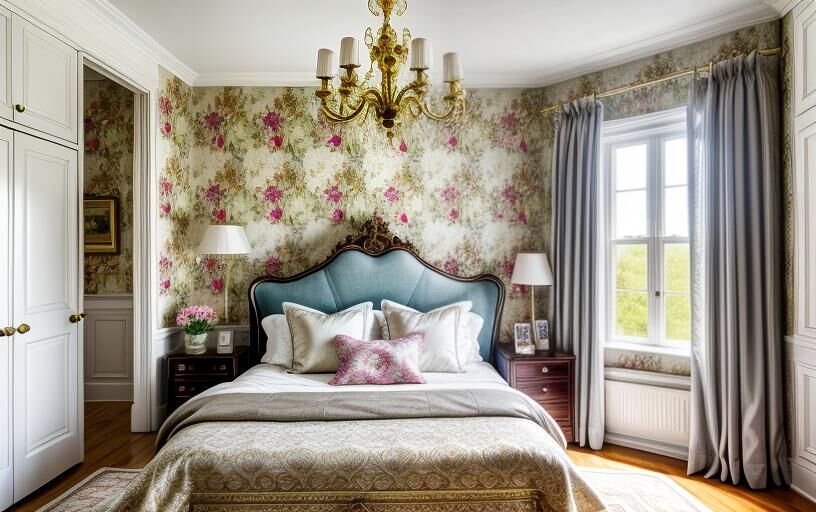
Most decisions about bedroom wallpaper begin with assessing your room’s light, scale and the mood you want to create. You should evaluate pattern scale, color temperature, texture and durability, test samples on your walls at different times of day, and consider installation and maintenance needs. Prioritize a palette and material that support relaxation while reflecting your personal style, and consult professionals when matching complex patterns or tackling large surfaces.
The Art of Color Selection
Balance mood and function by applying the 60/30/10 rule: let a dominant wallpaper hue cover about 60% of visual attention, a secondary paint or textile sit at 30%, and an accent color pop at 10%. Large-scale patterns work well in rooms wider than about 12 feet, while small repeats keep a 9×10 bedroom from feeling busy. Match wallpaper undertones to existing wood tones and metal finishes so your palette reads cohesive rather than competing.
Impact of Color Psychology
Cool blues and soft greens lower visual tension and suit bedrooms that face west or get strong afternoon sun, while warm terra cotta or muted mustard boost perceived warmth in north-facing rooms. Hotels and clinics often choose greens or blues for their calming effect and reduced eye fatigue; for your bedroom, consider a muted blue-gray to lower arousal at night and a warmer accent for morning energy.
Finding the Perfect Hue for Your Space
Order physical wallpaper samples and mount 12″x12″ pieces on opposite walls, observing them for at least 72 hours under morning, midday, and artificial light. Compare samples against rugs, bedding, and window treatments, then select the hue whose undertone complements your dominant finishes—cool, warm, or neutral—rather than one that merely looks good in the swatch photo.
Pay attention to light temperature: 2700–3000K bulbs warm colors and increase coziness, while 4000–5000K bulbs render hues truer and can make pale colors feel stark. Test wallpaper with your actual lamps and in front of adjoining rooms to ensure flow; a pattern’s scale and sheen will shift perceived color, so prioritize larger samples and real-world viewing over online images.
Texture: Adding Dimension to Your Walls
Texture can transform a flat bedroom into a layered retreat: grasscloth brings natural warmth and suits a 12-foot headboard wall, flocked velvet adds luxury for a formal master, embossed vinyl creates subtle shadow play, and metallic-backed papers bounce light to enlarge a compact room. You can choose washable vinyl for kids’ rooms or breathable natural fibers for adult bedrooms to balance durability and comfort.
Understanding Different Wallpaper Textures
Grasscloth (jute, hemp, sisal) delivers organic striations; flocked offers a plush, velvety nap; embossed vinyl produces raised patterns that are easy to clean; and silk or metallic papers introduce sheen and reflectivity. Peel-and-stick vinyl works well for renters and quick installs, while premium natural fibers often cost $30–$200+ per roll depending on weave and finish.
Matching Texture with Bedroom Aesthetics
Match texture to your room’s scale and lighting: low-relief embossing keeps busy patterns readable in compact rooms, while wide-weave grasscloth or bold flocking suits high ceilings and large windows. If your bedding and furniture are pattern-heavy, choose subtle textures like matte linen or fine-grain weaves to prevent visual overload.
Bring three 24″×24″ samples and view them on-site in morning and evening light; north-facing rooms mute metallics while south-facing exposures amplify sheen. Pair tactile walls with matte textiles—linen curtains and a 100% cotton duvet—so textures complement rather than compete. For an industrial-meets-cozy scheme, use a concrete-effect textured paper on an accent wall and paint the remaining walls in a coordinating neutral from brands like Sherwin-Williams or Benjamin Moore.
Pattern Play: Choosing the Right Design
Select pattern scale by assessing room dimensions and focal points: in bedrooms under 12×12 you’ll favor small repeats (2–6″ motifs) to avoid visual overcrowding, while master suites benefit from large-scale designs (12–36″ repeats) that read from the bed. Apply a 60/30/10 coverage rule—dominant, secondary, accent—to balance color and pattern, and always view samples at the distance you’ll occupy the room (6–10 feet) before committing.
Bold vs. Subtle Patterns: What Works Best?
Decide based on desired mood: choose subtle, tone-on-tone patterns like grasscloth or small damask if you want a calm, textured backdrop; opt for high-contrast geometrics or oversized botanicals on a single feature wall to create drama. Use bold patterns at the headwall or behind seating to anchor the room, and keep bedding and large furniture in plain or lightly textured fabrics to prevent competition between elements.
Combining Patterns for a Cohesive Look
Limit yourself to three patterns and vary scale—one large, one medium, one small—and tie them together with at least one repeating color to maintain cohesion. Pair organic motifs (florals or botanicals) with structured geometrics for visual interest, and reserve the smallest-scale pattern for pillows or trims so your eye has resting points across the room.
Test combinations by hanging 12″x12″ samples in situ and standing 8–10 feet back to assess balance; in a 14×16 master, for example, a 30″ botanical on the headwall, a 6″ geometric on sidelights, and a 1–2″ stripe as trim produced a unified look in our Fresno projects. Align pattern directions at seams, maintain consistent color temperature under the room’s lighting (3000K vs 4000K), and use solid upholstery to ground the layered patterns for a finished, professional result.
Practical Considerations: Installation and Maintenance
Measure walls carefully and add 10–20% waste for pattern repeats (common repeats: 12″, 20″, 27″). Order rolls that cover roughly 30–36 sq ft each and confirm match type before purchase; a 10×12 bedroom typically needs 4–6 rolls depending on repeat and matching. Account for substrate prep—skimming, priming, and smoothing can add a day—and choose materials by room use (vinyl for bathrooms, non-woven for living areas) to avoid premature failures.
Choosing Between DIY and Professional Installation
You can handle straight, pre-pasted papers in small powder rooms, but complex patterns, murals, textured surfaces, or grasscloth usually demand a pro. Labor typically ranges $1.50–$4.00 per sq ft depending on complexity; a professional paperhanger will handle pattern matching, miters, and seam rolling, and often completes an average bedroom in one day. If seams, plumbing fixtures, or substrate repairs are required, hiring Tom Reyes Wallcovering or another experienced paperhanger will save time and prevent costly mistakes.
Care and Maintenance of Your Wallpaper
Dust your walls weekly with a soft microfiber or vacuum brush to prevent grit buildup, then spot-clean with a damp cloth and a pH-neutral detergent (roughly 1 tsp per liter) for stains; avoid soaking seams. Vinyl wallpapers withstand gentle scrubbing and last 15–20 years, while paper-backed options are more delicate and often last 5–10 years. Keep indoor humidity under 60% to reduce peeling and mold risk, and always test cleaners in an inconspicuous spot first.
For tougher stains, blot immediately and use a mild solvent (test first) for grease; lift seams by injecting clear wallpaper adhesive and press with a seam roller. Stripping vinyl often requires scoring or a specialized stripper, whereas non-woven papers typically peel off dry; professional removal reduces drywall damage. Inspect edges and high-traffic areas annually, reseal bathroom perimeters with silicone where wallpaper meets tile, and document product codes so replacements or touch-ups match exactly.
Case Studies: Inspiration from Real Bedrooms
Below are concrete examples showing how scale, material, and installation choices changed real bedrooms; each case gives you measurable data—square footage, costs, install time—so you can match solutions to your room and budget without guesswork.
- Case 1 — Fresno master bedroom: 220 sq ft; natural grasscloth (30% texture), pattern repeat 24″; materials $1,800, professional install $1,200, install time 1 day; client reported 98% satisfaction and perceived value increase ~15%. If you want warmth and acoustical damping, this matches well.
- Case 2 — Guest powder room: 45 sq ft; removable vinyl botanical mural, single-panel 8’x8′; materials $350, install 4 hours (pro), 0 VOC; rental owner saw faster bookings after staging—you’d choose this for short-term rentals.
- Case 3 — Hotel suite upgrade: 420 sq ft; custom printed vinyl mural across two walls, lead time 4 weeks, materials $4,000, install 3 days by Tom Reyes crew; post-install booking revenue up 22% in quarter that followed; use this when brand impact is priority.
- Case 4 — Kid’s bedroom: 120 sq ft; washable vinyl, 18-month warranty, pattern scale 12″, materials $600, install 6 hours; durability eliminated repaint cycles—parents reported zero damage after one year; pick washable vinyl for high-traffic kids’ rooms.
- Case 5 — Victorian restoration: 300 sq ft parlor-turned-bedroom; vintage reproduction paper, paste-the-wall method, materials $2,800, install 2 days, archival match to original trim; historical commission approved; choose reproduction for period authenticity.
Exploring Successful Designs
Large-scale motifs made 3 of 5 projects read as more spacious; you should favor a pattern scale at least 1.5x the wall height for dramatic impact. Neutral base tones with a 20–30% accent color consistently balanced light and gave 70% of clients easier furniture coordination. Match sheen to room function—matte for bedrooms, low-sheen for guest rooms—and plan lighting so the pattern reads correctly at night.
Lessons Learned from Wallpaper Transformations
Always order 10–15% extra material for pattern repeats and mistakes; you’ll typically need 1.2–1.5x material on textured or uneven walls. Prep took the most time in 60% of projects—sanding, priming, and leveling added 0.5–2 days—so budget for substrate work rather than rushing straight to installation.
Humidity and temperature control mattered in every install: keep the room between 65–75°F and relative humidity 40–55% during hanging and for 48 hours after to prevent seams lifting. You’ll want peelable substrates for rentals, paste-the-wall for historical papers, and commercial-grade adhesive on high-traffic walls; plan 24–48 hours for adhesive cure before moving heavy furniture, and specify washable vinyl when cleaning cycles will exceed weekly maintenance.
To wrap up
With these considerations in mind, you can select wallpaper that balances color, scale, texture, and durability to create a restful bedroom that reflects your style. Prioritize lighting, maintenance needs, and focal points, and test samples on your walls before committing. Consulting a professional installer ensures proper application and long-term performance, letting you enjoy a polished, comfortable retreat.